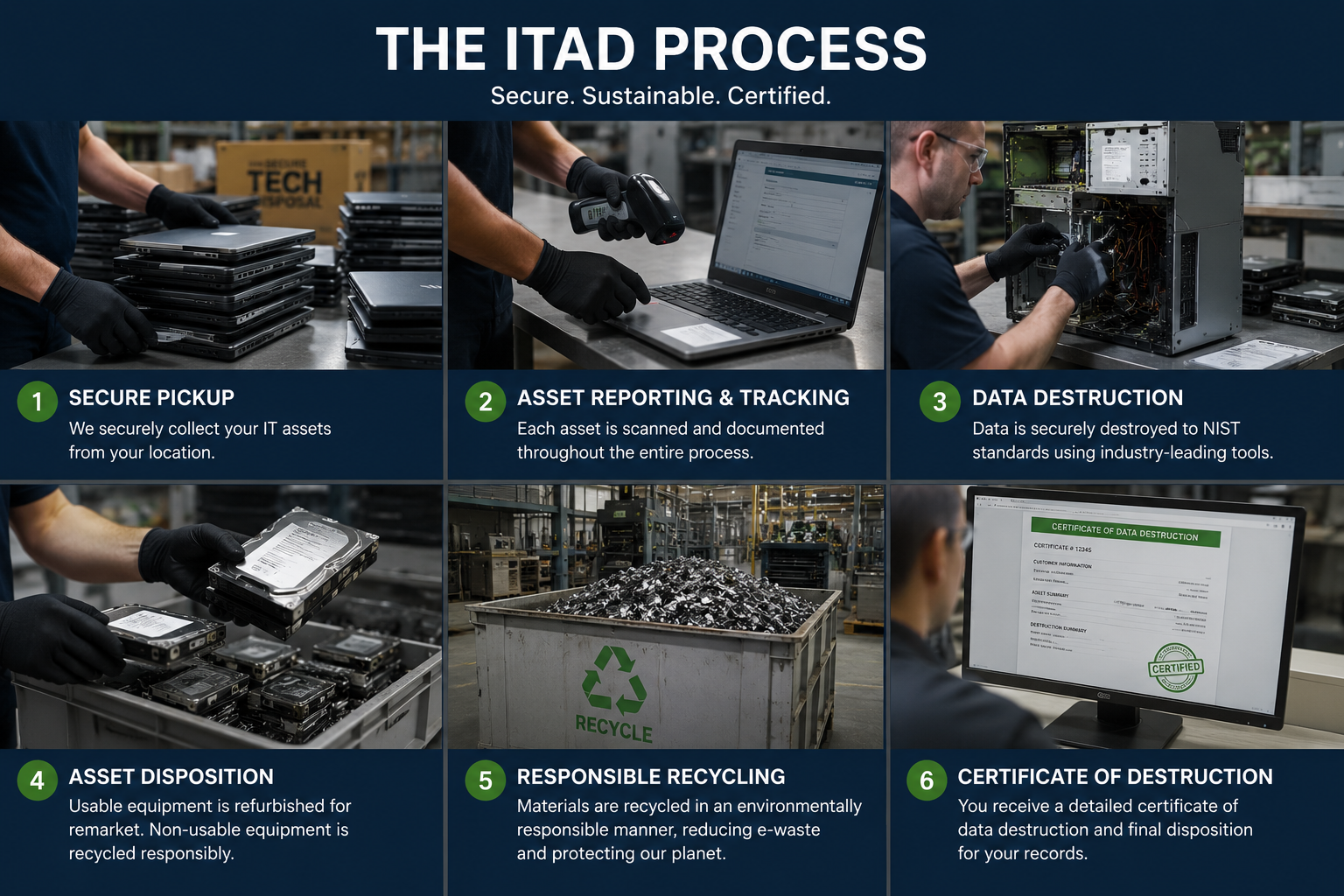
The first step is identifying and collecting IT assets that are no longer in use or have reached the end of their lifecycle. This can include computers, servers, laptops, smartphones, and other electronic devices.
Before any device is retired or recycled, it's crucial to ensure that sensitive data is securely erased to prevent unauthorized access. Data destruction methods may include data wiping, degaussing, or physical destruction, depending on the level of sensitivity and the type of device.
Throughout the ITAD process, assets are tracked to maintain a record of their disposition. This includes documenting the condition of assets, recording serial numbers, and detailing the steps taken for data destruction.
If the IT assets are still in good working condition, they may be suitable for reuse or resale. This involves refurbishing and testing the equipment to ensure it meets quality standards before making it available for resale or reuse within the organization or in secondary markets.
Assets that cannot be reused or resold are sent for recycling. Recycling involves the responsible disposal of electronic waste, with a focus on recovering valuable materials and minimizing environmental impact. This process should comply with environmental regulations and standards.
Throughout the ITAD process, organizations need to ensure compliance with relevant regulations and standards, especially concerning data privacy and environmental responsibility. Documentation of the entire disposition process is critical for audit purposes and to demonstrate adherence to regulations.